
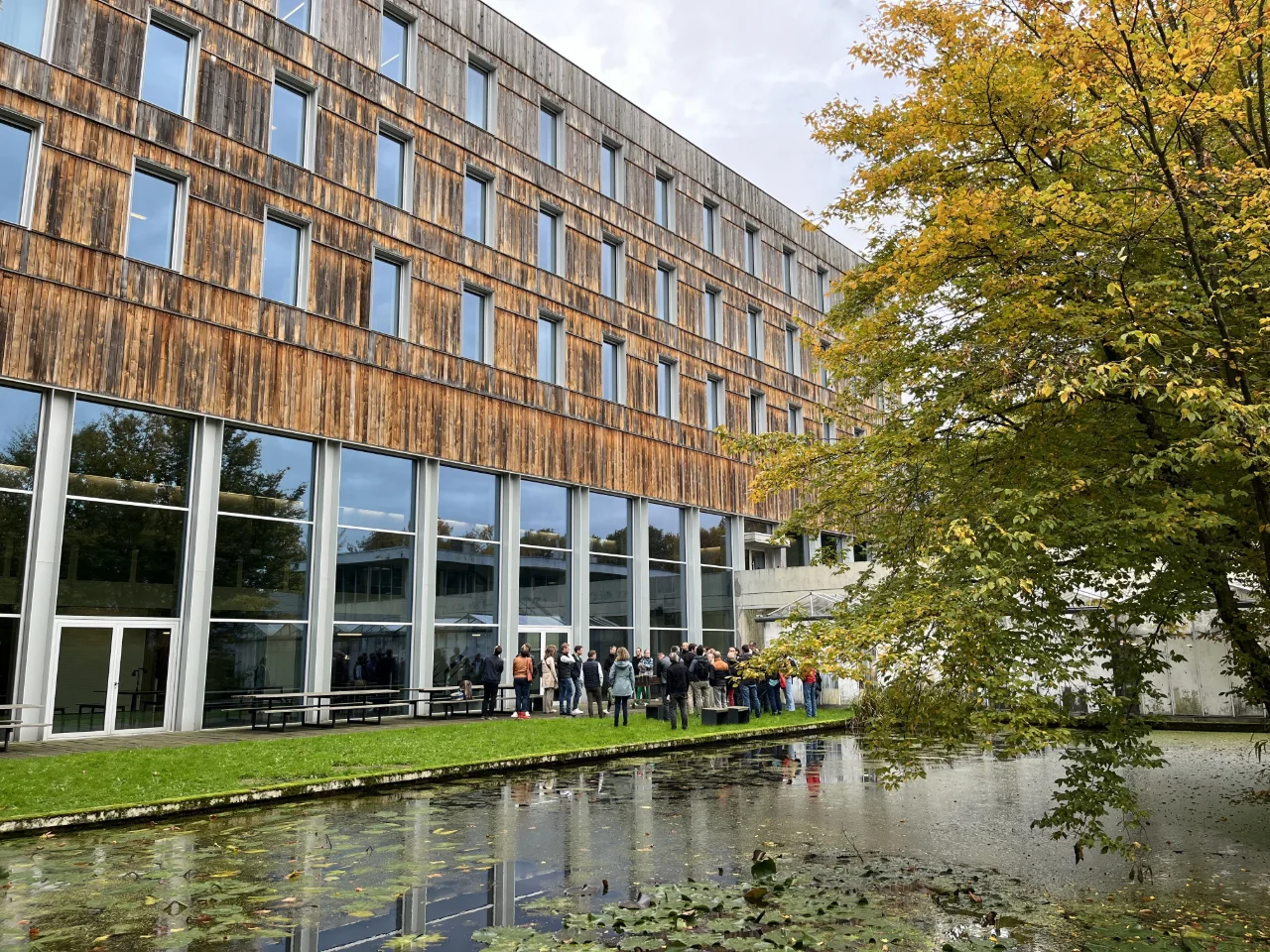
Visit to Building B22 at the University of Liège Botanical Institute: a case study in circular and sustainable renovation
On 17 October 2024, within the framework of the European project Greater Green+, Ligne Bois and CAP Construction organised a visit to Building B22 at the Botanical Institute of the University of Liège. More than 50 professionals took part in this event dedicated to an exemplary renovation project.
An ambitious energy and heritage renovation project
Building B22, listed in the Walloon Architectural Heritage Inventory, underwent an extensive energy and heritage renovation.
The project is part of a broader approach to circularity and material reuse, with a strong focus on enhancing the existing structure and reducing environmental impact.
Reuse at the heart of the project
The renovation is distinguished by the extensive use of reclaimed materials, including:
- 2,600 m² of reclaimed timber cladding
- timber from former barns (pine)
- Azobé boards from former Dutch port docks
- materials recovered from on-site deconstruction, dismantled, inventoried, cleaned and reused
Two forms of reuse were combined:
- reuse of materials sourced externally
- reuse of materials recovered directly from the existing building
Architecture shaped by reuse
The use of reclaimed materials had a significant impact on the architectural design process.
The lack of full control over available materials required:
- high flexibility in the design approach
- adaptation of specifications to materials whose exact characteristics were only known upon arrival on site
- careful consideration of availability and aesthetic integration of timber batches from different origins
A benchmark project in circular construction
Thanks to its integrated approach to sustainability and circularity, the project received national recognition.
It was awarded a mention in the “Tertiary Buildings” category at the 2022 Circular Buildings Awards.
It also benefited from support from the European Energy Efficiency Fund (eeef), a mechanism designed to support sustainable renovation projects by sharing risk and covering additional costs.
A pioneering approach
This project clearly illustrates the potential of reuse in building renovation. It demonstrates that a circular approach can be implemented at scale while combining energy performance, heritage value, and architectural innovation.
